

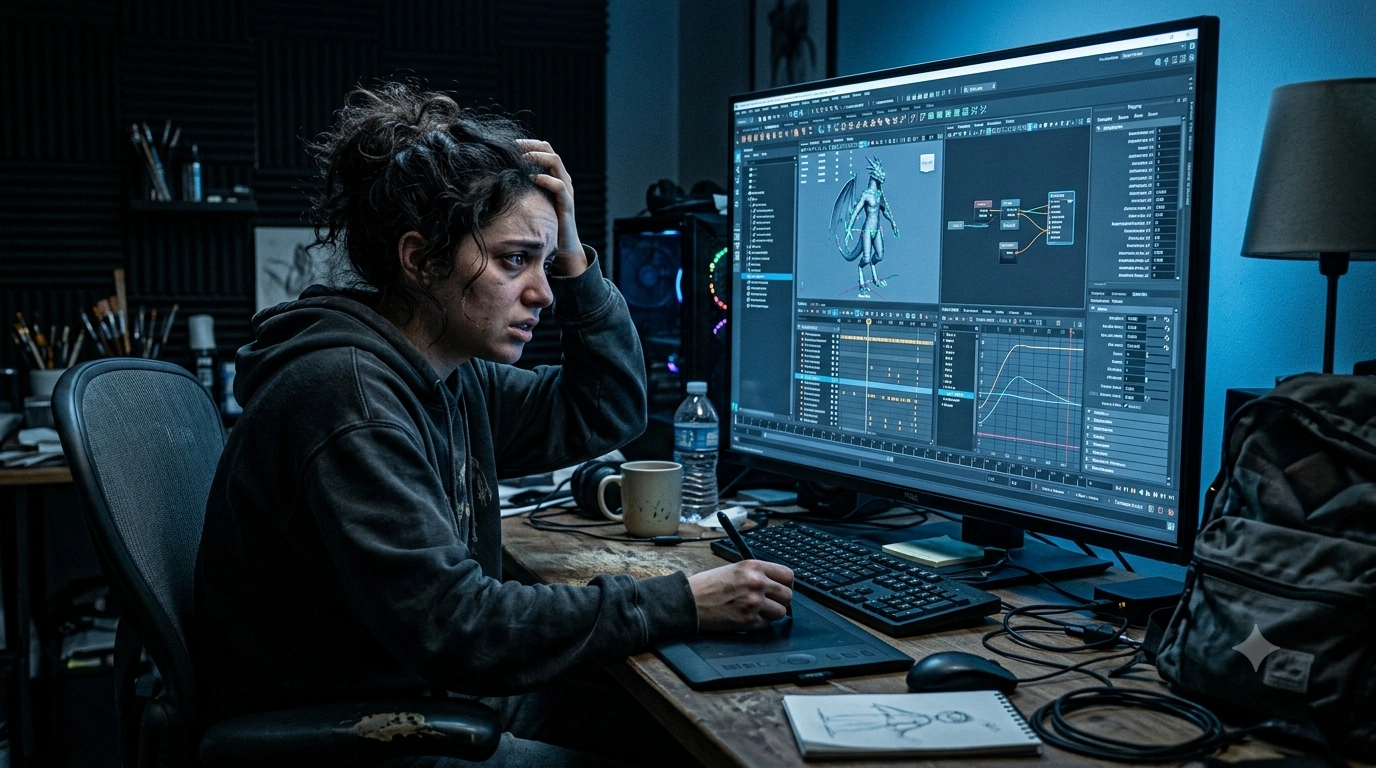
Free ai animation tools 2026: Animation used to demand deep pockets and steep learning curves. In 2026, a crop of free AI animation tools has changed that math, but the word “free” hides some fine print that trips up (depending entirely on the context) even the most budget-conscious creators. The trend keeps going.
Basically, if you have ever tried to animate a character with traditional software, you know the pain: licensing fees, render times. A skills gap that feels like a brick wall.
In the middle, the promise of free AI — or at least, platforms sounds almost too impressive to be true. Frankly, the reality sits somewhere. By the end of this piece, you’ll know exactly which apps actually deliver at zero cost, where the limits bite. How to squeeze every drop of value out of a $0 budget.
Key Point
- Most “free” AI animation tools in 2026 rely on credits, watermarks, or export caps; true unlimited free animation doesn’t exist at production quality.
- Small wins add up: using one tool for avatar generation, another for image-to-video motion, and free editing software can build a decent pipeline.
- Trial-mode thinking saves frustration. Approach free tiers as a prototyping lab, not your final delivery engine.
Free ai animation tools 2026:
- MiniMax, Viggle, Krea, Hedra, and CapCut offer the most generous free AI animation features in 2026, but each has strict credit or resolution limits.
- Free plans work brilliantly for social clips, experiments, and animatics; they fall apart when you need watermark-free, high-res commercial output.
- Pair a free animation tool with a free AI image generator to turn static art into moving visuals, sidestepping traditional animation costs entirely.
What Are Free AI Animation Tools in 2026?
In most scenarios, simply put, free AI animation resources are platforms that use machine learning models to generate moving visuals from text prompts. Still images, or video inputs, and they offer at least a starter tier at $0.
As it turns out, in 2026 — these range from browser-based avatar creators like HeyGen to full text-to-video generators such as MiniMax (often called Hailuo in some circles) and style-transfer motion tools like Krea. Kind of surprising, right? The common thread is that they lower the barrier for anyone (which works out well in practice) who cannot afford. After Effects or a professional rigging suite.
“Free” in 2026 rarely means unlimited. Generally speaking, animaker restricts free users to 5 video exports per month with watermarks. HeyGen gives you a single test credit. Before nudging you toward a paid plan.
Pika’s free tier offers basic generation credits, but the resolution and watermark status shift quickly. Industry roundups on sites like WaveSpeed and Renderforest again.
And again stress that these apps are best for short-form social experimentation and concept work, not full-blown production. When we talk about free AI animation platforms this year, we’re really discussing a sandbox: high-prospective, occasionally mind-blowing.
But ring-fenced by commercial guardrails.
📌 Key Point
Free AI animation tools in 2026 are fundamentally credit-gated, watermark-bearing sandboxes. They empower quick, impressive tests but aren’t designed for high-volume, client-ready deliverables without a subscription.
How Do Free AI Animation Tools Actually Work?
Under the hood, most of these tools run on diffusion models. Or transformer-based video prediction architectures, but you don’t need a PhD to use them.
You either upload an image, type a text prompt, or feed a short video clip, and the AI fills in the motion. For avatar tools like HeyGen or Renderforest’s generator. The system maps a voice track to a digital face, generating lip-sync and facial expressions in seconds. So what does that mean for you?
The real magic is in the pre-trained weights that have consumed millions of hours of motion data to predict plausible movement without frame-by-frame keyframing. At least, that outlines the core theory.
In my own early dabbles with free animation generators, I quickly realized that watermark-free output was a rarity. More importantly, that’s when I learned to plan my projects around export limits. I’d constantly generate a 5-second clip, download it at 720p, then stitch multiple clips in CapCut’s free desktop editor.
It wasn’t elegant, but it worked. What surprised me was how some tools, like Viggle.
Could perform character replacement on an uploaded video without any manual masking. The process felt like magic until the fourth attempt, when the character’s limbs suddenly fused together.
Reminding me that free versions still struggle with temporal consistency.
What’s the catch with “free” plans?
The catch is that free plans function as a heavily gated trial of a much (which completely makes sense logically) larger paid setup. It’s worth noting that video exports usually carry a watermark, clip lengths are capped (all the time 5 to 30 seconds). And resolution might be locked at 720p.
Hard to say. In 2026, free tiers is built to show what the AI can do, not to replace a production studio.
More often than not, But here’s the counter, for a creator testing an idea or posting quick Reels, these restrictions barely matter. Sounds too good to be true? Let’s see.
Just don’t expect to download a 4K, watermark-free animation without entering a credit card.
⚠️ Warning
Some tools listed as “free” today can pivot tomorrow; platform limits tightened mid-2024 for several AI video tools, so always double-check current credits before banking a project on a free tier.
The Problem: Why Animation Costs Are a Barrier
In the hardware to render scenes, traditional animation software can run hundreds of dollars per year in licensing, and that’s before you factor. As of 2026, a single seat of Toon Boom Harmony starts around $25 a month.
While Adobe After Effects comes bundled in a Creative Cloud subscription that rarely dips below $55 per month. For a budding animator or a content creator testing whether animated explainer videos will even connect with their audience, that upfront cost is a massive deterrent.
Add the adjustment period. And you’ve a recipe for abandoned projects.
It’s not just the money. The time investment is brutal.
It’s that simple. Learning frame-by-frame animation or complex rigging systems takes months, not days.
For a small business owner trying to whip up a speedy promo for Instagram, that getting-used-to phase is completely misaligned with their timeline. This is exactly where free AI animation tools enter the picture: they condense what used to be a multidisciplinary skill into a few clicks.
The emotional toll matters too. I’ve spoken with half a dozen aspiring digital animators who spent weeks on a project only to have it crash or look amateurish mainly because of a missing effect. The frustration drives people away from animation completely. And that’s the real problem: the barrier isn’t just cash, it’s hope.
“You stay in full creative control without needing a degree in motion design, and that’s the shift we’re seeing across the industry in 2026.”
The Agitation: Hidden Costs and Frustrations Even with Free Options
It all goes back to that earlier idea, here’s the part that isn’t talked about enough. Free AI animation fixes come with their own brand of hidden cost.
Not monetary cost, but creative friction. Watermarks can ruin the aesthetic of a carefully composed scene.
Resolution caps make your work look soft on HD displays. And credit systems mean you might be mid-project. When the tool suddenly blocks further exports.
I recall one weekend. Where I tried to produce a 30-second animated teaser using three different free apps to avoid reaching a (and rightly so) single platform’s credit ceiling. The result? A jarring visual inconsistency across scenes mostly since each tool interpreted motion differently.
” That’s the agitation. The constant negotiation between your vision and the tool’s limitations. Some creators in Reddit threads echo this, noting that free tiers often feel like a tease. Showing you what’s possible while never letting you completely execute a polished series.
In 2026, Animaker’s free plan gives you 5 watermarked exports per month. Read that again if you need to. That might be enough for one YT Short a week if you don’t make any mistakes.
HeyGen’s single credyou gottaly a one-shot test. Pika’s basic credits land eaten up by a few generations. ” It’s a different kind of stress. And it isn’t durable for anyone publishing reliably.
Here is the thing, this friction has an upside: it forces you to be deliberate. Specifically, when you only have three exports left, you storyboard carefully.
You test prompts on a scratchpad One thing to note, and you hone your eye for what works. That discipline is super useful later when, correction, you do upgrade to a paid plan. Though practical limits do exist.
💡 Pro Tip
Use a free AI image generator like Leonardo or Fooocus to create a high-quality still, then animate it with a free motion tool like Krea or Viggle. This two-step method conserves credits and dramatically improves visual coherence.
The Solution: Top Free AI Animation Tools to Start Using Right Now
Now we get to the practical side. Which free AI animation tools are actually worth your time in 2026? And the trend keeps going.
| Tool | Primary Function | Free Tier Limits | Best For |
|---|---|---|---|
| MiniMax (Hailuo) | Text-to-video and image-to-video | Limited credits per day, 720p watermark | Quick social clips with realistic motion |
| Viggle | Character animation and video style transfer | Basic free credits, clip length cap | Replacing characters in existing footage |
| Krea | Real-time AI image-to-video and style filtering | Generation cap, watermarked exports | Turning static art into moving graphics |
| Hedra | Lip-sync avatar videos | Test credits, short clips | Talking-head videos without a camera |
| CapCut | Desktop video editor with AI animation modules | Free, watermarks on some AI effects | Stitching animations, adding sound, and publishing |
| Animaker | Template-based AI animation with character rigging | 5 video exports/month, watermarked | Beginner-friendly explainer animations |
Each of these serves a different slice of the creative pipeline. Although the edges occasionally glitched, viggle, To give you an idea, impressed me when I fed it (which aligns with standard practices) a 10-second back-and-forth video. That’s not a small shift. And swapped the character for a custom still; the motion remained (which works out well in practice) intact while the figure changed.
Hedra’s avatar lip-sync felt eerily natural until I tried a non-English phrase and the mouth shapes couldn’t track. These aren’t failures, they’re boundaries you learn to work within.
Is it worth using free tools for commercial work?
If you’re delivering brand content that must look pristine. And be free of platform watermarks, free tiers aren’t your answer.
For storyboards; client pitches, or internal proof-of-concepts, absolutely. The key here is that in 2026, a bunch of agencies use free AI animation tools to mock up a visual before committing to a full production.
It cuts revision cycles by about half. The key is to rarely ever promise a client a watermark-free, 4K reel at zero cost, so those who ignore this regularly end up scrambling when the tool’s credit runs (which completely makes sense logically) out hours before a deadline. Hold onto this thought.
Granted, there’s a rebellious approach that works. As far as I know, pass it through a local upscaler, remove watermarks with a soft crop, and layer in your own audio.
It’s more steps, yes. But the final result can look surprisingly refined. I’ve seen creator friends do this for Reels that gathered over 50,000 views without spending a penny on software.
“Free AI animation tools in 2026 are powerful enough to build an audience—just don’t expect Hollywood polish without a credit card.”
✅ Action Steps
- Map your animation need — pinpoint whether you need lip-sync, motion graphics, or character replacement first.
- Choose two free tools, not one — pair an avatar tool like Hedra with an image-to-video platform like Krea to diversify your output.
- Test with a throwaway concept — use the first credits to experiment, not for a final asset, so you learn the tool’s quirks.
- Design around watermarks — add your own brand overlay or a border that hides the tool’s mark without cropping essential visuals.
- Batch your exports — once you hit your monthly limit, parallel process across multiple tools to keep your publishing schedule alive.
People Also Ask
Are any AI animation tools completely free in 2026?
No major tool offers unlimited, high-resolution. Watermark-free animation without some form of credit system or time limit.
Renderforest’s AI animation generator and Animaker both advertise free use, but exports carry watermarks and restrictions on assets. The closest you get is CapCut’s desktop editor.
Which includes free AI animation effects, though some advanced features calls for a subscription. Free access is generous but never unrestricted.
Which free AI animation tool is best for text-to-video?
Naturally, miniMax (Hailuo) stands out in 2026 for text-to-video on a free tier. Generating realistic motion from one-sentence prompts. It’s limited by daily credits and resolution, but the output quality for social media is especially high. Krea and Viggle also support text-powered prompts but lean more toward image-to-video.
Or style transfer, making MiniMax the top pick for pure text-to-animation.
Can I use free AI animation tools for YouTube monetization?
Yes, but with caution; watermarked or low-resolution clips may not meet platform quality standards, and quite a few free tiers prohibit commercial use without attribution. Check each tool’s terms before uploading; as of mid-2026, some. That jumped out at me too.
And like Animaker’s free plan, are clearly limited to non-commercial use unless you pay. For monetized content, a cheap paid plan is safer; or at least, to avoid copyright (more on that later) strikes and removal.
How do I remove watermarks from free AI animation exports?
There’s no ethical way to 100% remove an embedded watermark without (as one might expect) upgrading to a paid plan. Those numbers tell a story. Creators all the time work around this by adding their, hmm, let me put it differently, own branded border or cropping strategically—but cropping alters composition.
The best practice is to design your video so the watermark falls in a less noticeable area. Or to accept it as a signature of the free tier, which a lot of audiences are forgiving of on short-form platforms.
Frequently Asked Questions
What’s the biggest mistake beginners make with free AI animation tools?
This brings us back to what we started with, assuming unlimited access. They blow through free credits on unfocused tests, then hit the limit right before a deadline. A better move: simulate your workflow on paper, define what you need, and burn credits only on the final sequence. On top of that, beginners a lot ignore resolution; a clip that looks sharp on a phone screen may pixelate badly on a laptop.
So without fail check output specs before sharing.
Are there free AI animation tools for 3D character animation?
Realistically, not at a meaningful free tier in 2026, and let me tell you, most free tools excel at 2D motion, (a detail regularly overlooked) avatar lip-sync, or image-to-video transformations. Those numbers tell a story. Tools like DeepMotion offer motion capture. But with limited free credits and no true 3D scene-building.
For now, keep 3D aspirations on a paid plan or use Blender’s AI plugins (at least based on current observations) with manual work.
Will these free tools stay free?
Unlikely. As AI tool providers scale, free tiers usually shrink.
We’ve already seen credit reductions in some platforms during 2024 and early 2025. If a free tool becomes central to your workflow, plan for eventual costs or diversify across multiple options to hedge your risk.
The golden age of free AI animation is generous but temporary. File that away. You’ll see why it matters in a bit.
Conclusion: Making Free AI Animation Work for You
Realistically, free AI animation tools in 2026 aren’t a shortcut to a full-time animation career. But they are the best prototyping and social-content companions a budget-conscious creator could ask for.
You won’t replace a human animator, and you won’t fool a professional eye. But you’ll learn what works, test ideas faster, and occasionally produce something that genuinely turns heads.
As it turns out, that’s more than enough to justify the $0 price tag.
Taking a step back here, the real move is to stop waiting for the perfect “free. Unlimited” tool to appear. It won’t. Instead, grab a few of these platforms.
Respect their limits, and start making. Because the only failure in 2026 is letting a tight budget convince you that animation is out of reach.
“The creators wincing at their watermarks today are the ones with a paid, polished portfolio tomorrow—free tools are the training ground.”
🔍 Research Sources
Verified high-authority references used for this article