


If you’ve been tracking Web3 and the metaverse over the last few years. You’ve probably felt a kind of whiplash.
One moment it was the next trillion-dollar internet; the next, a string of empty virtual land parcels and ghost-town experiences. The Web3 and Metaverse update 2026 tells a different story — quieter, less flashy — but far more credible for anyone actually trying to build something that lasts. Read that again if you need to.
This isn’t the same story you read in 2022. If you’re a tech professional.
Or digital asset investor, that’s exactly why you should care.
Web3 and Metaverse update 2026:
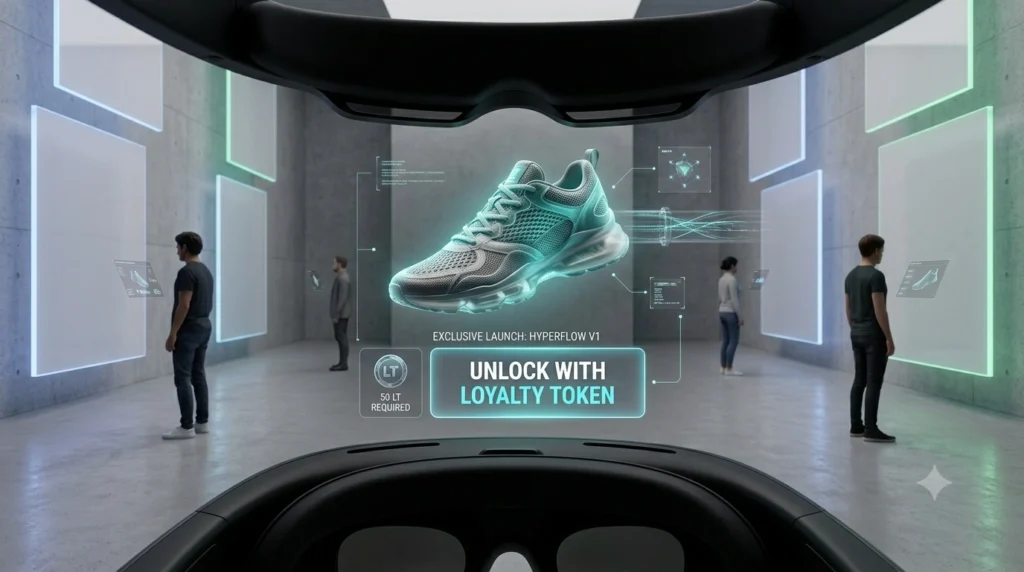
- The metaverse has been reframed around practical, measurable returns — AR try-ons, 3D commerce, and NFT-gated loyalty — not speculative land flipping.
- Web3’s tech priorities in 2026 are modular blockchains, account abstraction, cross-chain interoperability, and AI integration, making decentralized identity more usable for brands.
- Mass adoption is still years away, but the building is now happening in quiet, ROI-focused projects rather than headline-chasing platforms.
Key Point
- The biggest shift in 2026 is that brands now measure the metaverse in conversion rates and retention, not “brand awareness” — and that changes every investment decision.
- Virtual land speculation collapsed for a reason, but that doesn’t mean the space is dead. You’ll see more value in a well-designed AR try-on experience at a retail brand than in any massive, empty virtual plaza.
- If you’re a developer, the most important skill isn’t building a metaverse world; it’s making identity and assets flow seamlessly across blockchains and devices — that’s where 2026’s budget is going.
What Are Web3 and the Metaverse in 2026?
The key lesson is simple: blocksep matters. In 2026, these terms have been stretched and redefined so many times that it pays to start with a clean, no-nonsense definition.
Let that sink in for a second. Web3 refers to an internet architecture built around decentralized protocols, user-owned identities, self-custody wallets, and token-based economies. The metaverse — at least in 2026.
Not exactly what you’d expect. Is no longer one giant virtual universe everyone plugs into.
You could say and 3D interactive experiences tied to commerce; gaming; events, and customer loyalty. When it comes down to it, the two ideas intersect when decentralized identity or tokenized rewards power those experiences, because suddenly a user can carry their reputation. Digital objects across different apps without relying entirely on a single big-tech platform account.
How useful is “metaverse” as a term in 2026?
Honestly, it’s become less useful as a standalone label. ” In general “metaverse” still appears in investor decks. And headlines, but inside actual developer Roadmaps, you’re far more likely to hear about Horizon OS integration, React-based 3D stores, or on-chain identity layers. Hard to ignore those numbers. That’s a sign of a maturing market.
One where specifics matter more than buzzwords.

The Big Letdown: Why the Original Vision Fell Apart
Moving on to something related, if you bought land in a virtual world in 2022 expecting crowds to flood in, you know the sting of that disappointment. Not exactly what you’d expect. The original consumer metaverse promise; a persistent, interoperable virtual area where everyone would work, socialize, and shop; simply didn’t materialize.
The hardware was clunky, the onboarding was a mess. And most people had no reason to stay.
When it comes down to it, in 2026, the consensus among developers and market commentators is that the mass adoption timeline is still years away. And anyone who claimed otherwise was either speculating or selling something. That failure stings. But it’s also the most honest foundation from which to rebuild.
However, nuance is required here.
⚠️ Warning
Assuming the metaverse “failed” because your preferred virtual land plot dropped in value ignores the real construction happening now in AR commerce and loyalty infrastructure.
What exactly went wrong with the first metaverse wave?
The most-cited fault line was that platforms treated the — wait, let me rephrase, space like a real estate play, not a service. Millions of dollars poured into digital land, avatar wearables, and event sponsorships with no clear way to measure whether any of it boosted revenue or retention. Without those business metrics, brand fatigue set in fast.
By 2025, many high-profile virtual headquarters had quietly, wait, let me rephrase, been abandoned — and user growth charts had flattened. The lesson wasn’t that immersive tech was worthless; it was that you can’t skip the utility part and expect people to show up.
The Uncomfortable Reality: Where the 2026 Update Leaves Investors and Builders
It’s tempting to write off the entire category as a failed experiment. Scroll through any crypto forum right now. ” The tone is weary, skeptical, (which works out well in practice) and justifiably so.
Retail investor ensoiasm has cooled dramatically because the narrative that once drove token prices; the idea of a unified virtual world takeover — has lost its steam. But here’s the thing: while the hype tourists have left, the everyone still building are shipping code that solves real problems in identity, interoperability, and brand engagement.
That’s where the 2026 Web3 and Metaverse update gets interesting. It’s not a comeback story.
It’s a correction.
“The metaverse didn’t die; it got quiet, profitable, and a lot less flashy.”
That quote sums up the shift perfectly, mostly since in place of the old grand narrative. In a lot of cases, the smarter money in 2026 isn’t betting on a single virtual world.
Puts things in perspective. But on the tooling that lets brands spin up immersive product views in the same way they once rolled out mobile apps. That’s a less glamorous pitch.
But it’s also one you can measure in quarterly sales reports.
The Practical Pivot: How the 2026 Web3 and Metaverse Update Is Reshaping Value
Ask any marketer who’s been in this space recently. ” to “can we prove the lift from a virtual try-on. ” That measurable payoff is the single biggest difference between 2022 and 2026. Make of that what you will.
Brands are deploying 3D product configurators, AR makeup tutorials, and NFT-gated access to real-world perks. And they’re tracking conversion rates, return-on-ad-spend.
Customer lifetime value the same way they’d for any e-commerce channel. The tech that supports this is finally maturing: modular blockchains (which completely makes sense logically) reduce transaction friction.
Account abstraction makes wallet onboarding feel less like a cryptography lesson; cross-chain bridges let digital assets move without breaking the user flow. Which at the root drives the core point.
💡 Pro Tip
If you’re evaluating an investment or a build decision, ask whether the project ties directly to a measurable consumer action — a purchase, a repeat visit, or a loyalty redemption. If it doesn’t, walk away.
Where is the money actually flowing in 2026?
Most of it is clustering around three spots. Right off the bat, AR-powered product visualization for retail, think furniture apps that place a true-to-scale item in your living room before you buy. On top of that, Web3 identity layers that let users accumulate credentials, memberships, and rewards across dozens of apps without put together new accounts each time.
Third, branded virtual events that are small, focused, and offer exclusive digital collectibles, but only. When those collectibles indeed something real, like early, or, better put, access to a product drop or a discount code. This isn’t the overwrought “metaverse mall” concept. It’s tighter, cheaper, and way more legit.
How Developers and Brands Are Actually Building Now
Meta’s developer messaging in 2026 reveals a major strategic change: the company is talking less about sweeping virtual worlds and far more about Horizon OS and mobile-adjacent VR experiences. And the trend keeps going. That’s not a retreat; it’s a signal that the distribution model is maturing toward device-first.
Operating-system-style engagement, not dissimilar to — well, actually, how iOS and Android got their start. Other platforms are following suit. Instead of trying to create an all-in-one immersive universe, they’re shipping solutions that let clothing retailers, car manufacturers.
And beauty brands embed 3D previews right away into their existing web stores, often with a Web3 wallet hook for persistent customer identity.
I spent a few weeks tracking developer forum — or rather, discussions earlier this year. And one thing jumped out. The builders who are still here aren’t complaining about the death of the metaverse because they’re too busy shipping. Generally speaking, the energy feels less like a gold rush and more like a disciplined R&D lab; which, honestly, is a far healthier place for long-term value creation.
✅ Action Steps
- Audit your current customer identity stack — If every touchpoint requires a fresh account, you need Web3 identity tooling to connect those dots seamlessly.
- Experiment with a single AR product view — Pick one hero product, integrate a 3D configurator, and measure conversion lift against a control group.
- Deploy a token-gated loyalty test — Issue a low-cost digital collectible that unlocks a real-world perk, and track repeat purchase behavior over 90 days.
- Choose a modular blockchain for your next prototype — Lower gas fees and better interoperability reduce user friction dramatically.
- Ignore land-sale hype completely — The ROI in 2026 lives in utility-driven applications, not virtual parcels.
Is the metaverse still a thing in 2026?
From what we can tell, the idea of a single, shared virtual reality hub has faded; in its place. You’ll find dozens of small, interconnected mixed-reality experiences linked by Web3 identity rails. If you’re looking for sweeping sci-fi promises. If you’re looking for practical commerce resources that work today, you’ll find a surprisingly active, if understated — scene.
People Also Ask
Are any metaverse projects still actively building in 2026?
Shifting gears a bit, this brings up an interesting angle. Completely, mostly in gaming, branded events, and digital identity. Platforms like Horizon Worlds, Decentraland, and Sandbox still operate. But the bulk of innovation comes from startups building modular AR commerce tooling and on-chain loyalty programs rather than mega-scale virtual worlds.
What are the biggest Web3 trends in 2026?
The top four technical priorities are modular blockchains, account abstraction, cross-chain interoperability, and AI integration. On the commercial side, the biggest trend is tying Web3 wallets to persistent customer relationships that span multiple apps and rewards programs.
Why did metaverse land prices crash?
The speculative frenzy powered by 2021-2022 hype pushed virtual land valuations to unlasting levels with no underlying cash flow from actual commerce. That changes the picture quite a bit. When brands stopped buying for the sake; well, actually, of publicity and user traffic didn’t materialize. Prices corrected sharply, leaving only utility-powered parcels retaining any value.
How is Meta approaching the metaverse in 2026?
Meta has quietly pivoted from a grand unified metaverse vision to a device-centric strategy (which aligns with standard practices) built on Horizon OS. The company now stresss mobile-adjacent VR experiences and developer apps for mixed reality, which signals a more pragmatic, operating-system-style play rather than a single immersive universe.
Is there any measurable ROI from metaverse marketing?
On the surface, yes, but only when campaigns tie to concrete actions. AR product try-ons that lift conversion rates by a measurable percentage. And NFT-gated access that drives repeat purchases are the kinds of use cases brands are reporting success with in 2026. The trend keeps going.
Vague “name visibility” plays no longer convince anyone.
FAQs
How does Web3 identity actually work in practice?
It makes use of a wallet address as a universal login layer, allowing users to carry credentials, membership badges. And transaction history across different platforms without giving away personal data. This makes loyalty programs stickier because the user’s reputation follows them.
What’s the catch with brand-built metaverse experiences?
Taking a different approach here, consumer friction is still the biggest bottleneck. Most people aren’t familiar with wallet setup, device compatibility issues still pop up — and the fragmented standard scene means a seamless cross-platform experience remains elusive.
Are institutional investors paying attention to this space?
Cautiously. The focus has shifted toward enterprise-grade identity and infrastructure plays rather than consumer-facing virtual worlds. Venture capital is more interested in the plumbing, modular chains and decentralized identity, than in the next digital theme park.
When might the metaverse reach true mass adoption?
Most realistic estimates point to the early 2030s. Assuming hardware comfort, interoperability standards, and user-friendly onboarding improve bigly. In 2026, the emphasis is on selective. Now, high-utility deployments rather than chasing a billion daily active anyone on the platform.
Where the 2026 Web3 and Metaverse Update Leaves Us
Arguably or three years ago was largely a narrative built on heavy venture (depending entirely on the context) capital and retail FOMO. That version is gone, and capable riddance. What’s replacing it isn’t a perfect utopia, but it is a far more trustworthy set of technologies that most of us are actually using. To invest in furniture, to prove their identity across apps, to earn loyalty rewards that aren’t locked inside a single platform.
Of course, actual metrics may shift.
Pivoting slightly, the 2026 Web3. Metaverse update hasn’t delivered the flashy arrival of a singular virtual world. Instead, it has quietly proven that decentralized infrastructure, combined with mixed reality, can solve real problems for brands and consumers alike.
Is it worth it though? If you’re willing to see past the ruins of the 2022 hype cycle, you might just find a productive, rewarding building site.
🔍 Research Sources
Verified high-authority references used for this article