

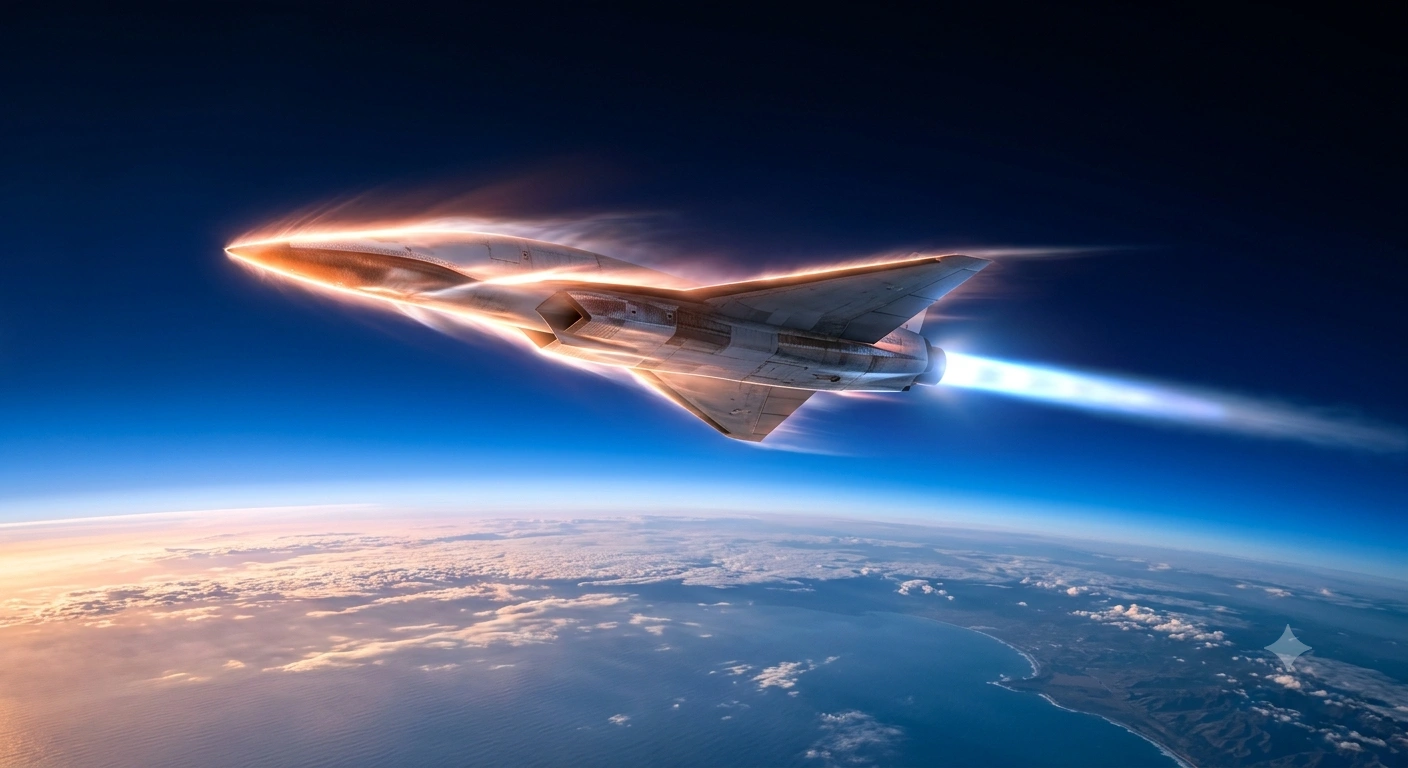
Ursa major stratolaunch hypersonic technology : If the goal was to prove that hypersonic flight testing doesn’t have to be a single-use, heart-stopping gamble, Ursa Major Stratolaunch hypersonic technology just handed the industry a challenging reset. The numbers that matter most aren’t Mach 5. Or some glossy press-release altitude; they’re ten consecutive flights.
Recovered vehicle. 9 million engine contract that looks an awful lot like vote of confidence from people who actually write checks. Since late 2024, the Hadley liquid rocket engine has been doing what very few hypersonic propulsion systems ever attempt. Showing up again and again and again.
TL; DR
- Ursa Major’s Hadley engine completed 10 consecutive flights at sustained hypersonic speeds with reusable Talon-A2 testbed recovery, shifting hypersonic testing from single demos to repeatable campaigns.
- A $32.9 million contract for 16 Hadley H13-based engines and a separate $24.7 million Missile Defense Agency contract signal defense investment far beyond basic R&D.
- The technology is explicitly dual-use, covering both hypersonics and space launch, which helps stabilize supply chains and production economics across mission profiles.
Key Point
- 10 consecutive hypersonic flights aren’t a fluke; they reflect an engine and vehicle design that’s already moved past the shaky proof-of-concept phase.
- Because Talon-A2 test vehicles have been recovered and flown multiple times, the per-flight development cost is structurally lower, a reality that defense program managers have wanted for a decade.
- The Hadley engine family is actively bridging the gap between space launch and hypersonics, meaning you’re looking at a propulsion chain that could serve both the Air Force Research Lab and commercial orbital customers without reinventing the wheel.
- Despite all the operational excitement, most performance details—burn duration, specific impulse, sustained altitude—haven’t been disclosed publicly, so third-party benchmarking is still a waiting game.
What Is Ursa Major Stratolaunch Hypersonic Technology?
Basically, it’s a propulsion-plus-platform marriage that pairs Ursa Major’s Hadley — to be more precise, liquid rocket engine with Stratolaunch’s Talon-A reusable hypersonic test vehicle. Worth considering. You won’t find a single magic widget; the real story is the integration of an engine that can breathe fire at speeds above Mach 5 with an airframe that comes back in one piece after each mission.
Hypersonics community a reliable. Repeatable flight laboratory that doesn’t vaporize on splashdown. Store this one. It ties everything together later.
In practice, this means the Hadley engine pushes the Talon-A2 testbed to sustained hypersonic velocities, the vehicle executes its test profile, then glides back for recovery and re-flight. Make of that what you will. It’s a dramatic departure from the classic single-use sounding-rocket approach.
Where every data point costs you a complete vehicle and propulsion unit. Ursa Major’s own May 2025 release described the flights not as demonstrations. Hard to ignore those numbers.
But as “operational test bed missions,” a deliberate phrasing shift that signals the program has left the one-off demo world behind.
💡 Pro Tip
When evaluating this program’s maturity, look past the top-line speed number and watch for sustained burn duration and turnaround time between Talon-A2 flights; those are the real readiness indicators.
How the Hadley Engine Reaches Sustained Hypersonic Speeds
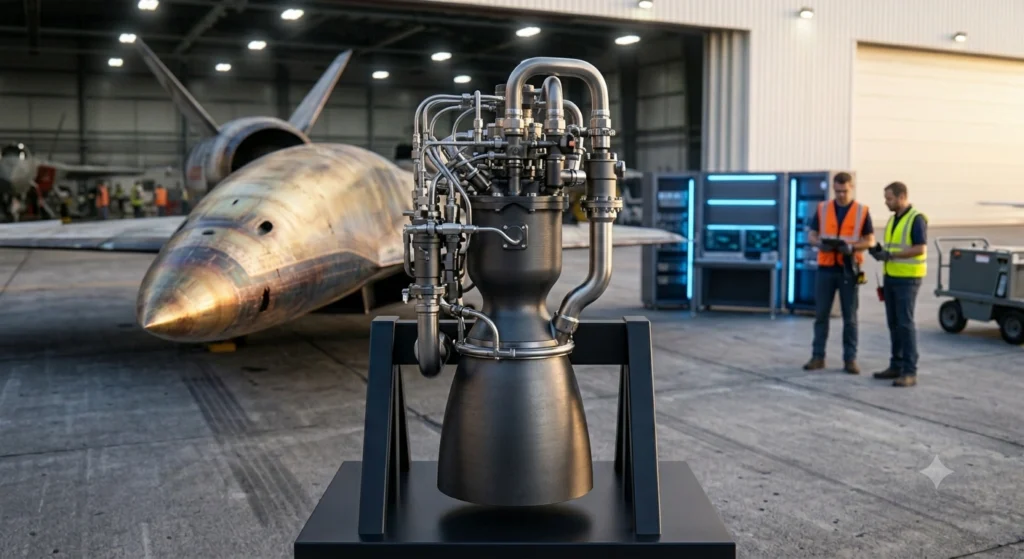
Liquid rocket engines have been reaching hypersonic speeds for decades, but doing it repeatedly on a recoverable testbed is a different beast. The Hadley engine burns liquid oxygen and kerosene, producing thrust levels that push Talon-A2 through the transonic gauntlet. And into steady hypersonic flight without requiring an exotic air-breathing scramjet that works only in a narrow envelope. That architectural choice means you get a propulsion system that’s equally at home on a space-launch upper stage.
Which is exactly why Ursa Major markets it as dual-use.
During the late 2024 test campaign, the engine exceeded all flight and power objectives on both hypersonic sorties, according to the company. And the trend keeps going.
Then, by April 2026. The firm reported ten consecutive successful flights with multiple sustained-hypersonic missions. I’ve watched the video footage from those tests, and what struck me wasn’t the exhaust plume.
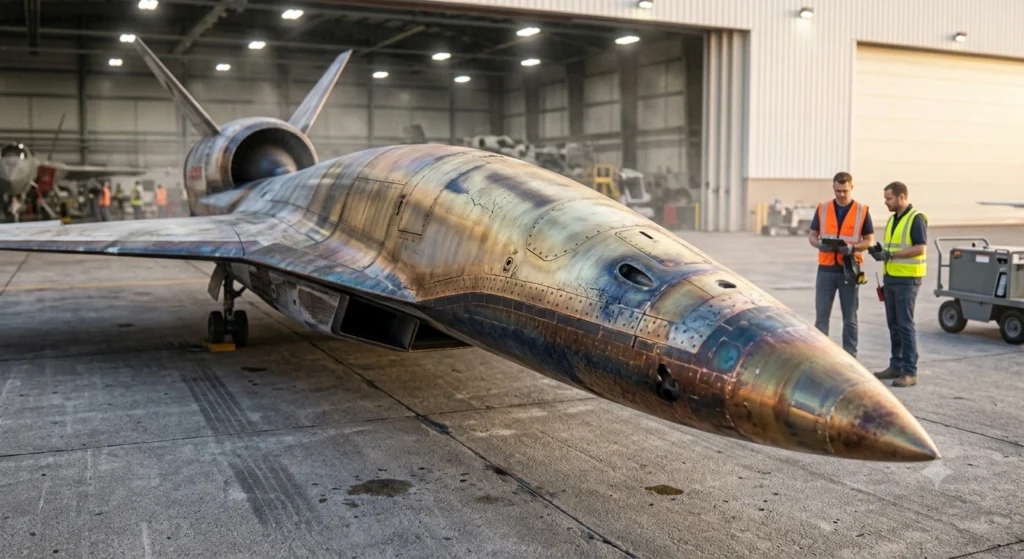
It was the matter-of-fact way the recovery teams were handling a vehicle that had just endured temperatures hot enough to melt steel. That kind of routine operational tempo only emerges after you’ve worked the bugs out through sweat, telemetry, and probably a few insanely tense debriefs.
How does the Hadley engine sustain hypersonic speeds without an air-breathing scramjet?
It doesn’t need to scoop air. Hadley carries its own oxidizer, so the engine’s performance is altitude-agnostic. Now, in a hypersonic test context, that eliminates; I mean, the inlet design headaches and Mach-number limitations scramjets face.
More importantly, the trade-off is shorter burn time for the same push forwardlant mass. But for a testbed that asks for reliability first, it’s a worthwhile compromise.
Fine, that brings up an interesting nuance. Because the engine doesn’t depend on atmospheric oxygen, it can, or rather, fly test profiles that dip into thinner upper atmospheric bands. Where scramjets would flame out, giving system — actually, that’s not quite right, designers cleaner data on thermal protection and guidance.
The latest reporting shows the Hadley H13 variant, Basically, referenced in the June 2025 engine (and rightly so) contract, likely incorporates thrust. And reliability improvements learned from those early Talon flights, though the exact hardware changes haven’t been publicly detailed. This detail matters more than it might seem right now.
📌 Key Point
The engine’s dual-use design is not a marketing slogan; it genuinely reduces production costs because the same Hadley line builds engines for space launch customers and hypersonic test customers simultaneously.
The Talon-A2 Reusable Testbed: Why Recovery Changes Everything
The difference between a demonstration and an operational test campaign often comes down to a single unpalatable number: the cost of throwing away your vehicle after every flight. Stratolaunch’s Talon-A2 was designed from the start to survive the hypersonic gauntlet. Perform its test mission, and land for reuse.
Both of the initial flights above Mach 5 ended with successful recoveries. According to the company. S. 7 million contract to expand the Talon-A effort into missile-defense-related testing.
Think about what that signals. A government agency that lives.
And dies by test data is betting that the reusable hypersonic architecture will deliver enough flight-hours per dollar to justify shifting away from traditional single-use targets. More importantly, in my observation, this is where Stratolaunch’s air-launch approach brings an underappreciated advantage: the carrier aircraft can release Talon-A at all (as one might expect) kinds of latitudes. That’s only part of it, though.
Altitudes — and airspeeds, which massively expands the accessible test envelope compared to ground-launched rockets that are locked into a single path corridor.
What’s the catch with reusable hypersonic flight?
Moving on to something related, thermal protection, plain and simple. Re-entering at hypersonic speeds after a test profile puts brutal heat loads on the airframe.
And the recovery takes that every tile, seal, or, better put, and actuator survives without ground personnel touching it mid-flight. Weird, right? Stratolaunch hasn’t released thermal soak data or turnaround time between flights, so the full operational economics are still opaque.
Still, recovering the vehicle twice. After flight above Mach 5 is a pretty strong signal that the thermal design works at least for (as one might expect) the tested profiles.
⚠️ Warning
Don’t assume reusability automatically equals low cost. Until Stratolaunch discloses flight-hour pricing or engine refurbishment time, the business case remains directional rather than proven.
From One-Off Demos to Operational Hypersonic Campaigns
There’s a saying in the aerospace testing community: one flight is luck. Three flights is a trend, ten flights is a capability. ” The words matter. Not the easiest thing to wrap your head around. Hypersonic enterprise has spent years chasing spectacular but expensive single-use experiments that were brilliant in the moment but left almost no repeatable test infrastructure behind.
9 million contract to assemble. That’s not a small shift.
And supply 16 engines based on Hadley H13 technology for Stratolaunch’s hypersonic test projects. That’s not a feasibility study; it’s a procurement. Sixteen engines suggest a flight rate that can actually support step-by-step development, where a hypersonic payload developer gets multiple test shots, tweaks something, and flies again within a timeframe that isn’t measured in years.
That’s how the hypersonic weapons community finally gets the steep ramp-up time that the missile defense community has been asking for. Though practical limits do exist.
“Ten successful flights is proof that hypersonic capability is here.”
Has the Missile Defense Agency’s involvement changed the trajectory?
Absolutely. 7 million MDA contract moves the Talon-A platform from a general-purpose hypersonic test asset into a missile-defense test asset. Not exactly what you’d expect.
Which opens doors to a different funding stream and a seriously distinct set of operational requirements. It stands out. That kind of customer focus tends to accelerate hardware maturation.
Because the test scenarios are straight up tied to threat-representative targets, not open-ended research objectives. Stick with me here; this pays off.
Where the Program Is Headed: Pacific Hypersonic Flights and Beyond
The forward-looking statements, still aspirational might be true, but are worth taking seriously. Summit 2025 coverage — Dan Jablonsky discussed a 2026 Pacific hypersonic flight target with a range of over 500 nautical miles. That would be an enormous operational leap, taking the system from controlled test-range flights into a long-distance. What happens when you do?
Consider this: ocean-spanning profile that more closely replicates real-world missile flight corridors. If achieved, it would likely trigger a new wave of interest from both the Navy.
And Air Force, who need to validate sensor and interceptor performance against high-speed, maneuvering threats over water.
From what you’ll see, but speaking as someone who has tracked hypersonic program timelines for years, I’ll offer a note of caution: Pacific flight targets in this industry have a habit of slipping right when they sound most concrete. The regulatory, range-safety. And data-collection challenges over open ocean are tough. Still, the foundational building blocks—serial engine production, proven vehicle recovery.
And defensive customer funding—are already in place. Which puts this program on much firmer ground than most hypersonic testbed efforts of the past decade.
✅ Action Steps
- Monitor the 2026 Pacific flight preparations — that demonstration will be the single strongest validation of operational range and vehicle endurance.
- Track any propulsion data releases from the Hadley H13 engine contract — burn duration and specific impulse numbers, if published, will let you benchmark against competing liquid rockets.
- Watch for third-party test range reports — independent verification of hypersonic flight duration and recovery turnaround is the missing piece right now.
- Evaluate the Talon-A’s payload capacity and volume growth — as MDA testing ramps up, payload flexibility will determine how many mission types the platform can actually serve.
People Also Ask
What makes the Ursa Major Stratolaunch partnership different from previous hypersonic testbeds?
Taking a different approach here, the partnership combines an engine built for mass production with a truly reusable — or rather, airframe, and both partners have now showd multi-flight campaigns rather than one-off experiments. That moves the model from capital-intensive single-use testing to repeatable sorties that can inform step-by-step design.
Is the Hadley engine only for hypersonics?
No. Ursa Major explicitly markets Hadley as a dual-use engine suitable for both hypersonics and space launch. The same engine design can push a hypersonic testbed to Mach 5+. Or serve as an upper stage on a small satellite — or rather, launcher, which improves the business case for manufacturing at scale.
How fast does the Talon-A2 actually fly?
Stratolaunch and Ursa Major have confirmed velocities above Mach 5 on multiple occasions, but the exact top speed, altitude, and sustained Mach number are not publicly disclosed. Read that again if you need to. The term “sustained hypersonic” shows the vehicle maintains speeds in the Mach 5+ regime for a meaningful portion of the flight. Rather than briefly spiking.
Has the U.S. government independently validated the test results?
As of mid-2026. Publicly available verification remains limited to company-issued statements. While the Missile Defense Agency’s contract involvement strongly suggests independent interest, formal government; no, scratch that, test reports confirming all performance (and the data generally agrees) claims haven’t been released.
What does the $32.9 million engine contract cover?
According to The Defense Post, it covers the assembly. Keep that in mind. And supply of 16 upgraded Hadley H13-based engines for Stratolaunch’s hypersonic test projects.
The reporting does not break down unit pricing or delivery schedule. But the quantity alone signals a shift toward serial production rather than low-rate prototyping.
FAQs
Is the Talon-A2 fully reusable?
Switching focus for a On top of that, yes, the vehicle has been recovered and flown multiple times, including two confirmed hypersonic flights above Mach 5 where the testbed was successfully retrieved for reuse. Full operational turnaround timelines, even so, haven’t been disclosed.
What’s the significance of ten consecutive Hadley flights?
Ten consecutive flights without a single failure show that the engine is past the early reliability phase. And can support operational test cadence. It’s the statistical evidence that shifts the program from experimental to operational.
Are there any independent confirmations of the hypersonic speed claims?
Not yet. Which means independent verification from defense agencies or test ranges would strengthen the case, but hasn’t materialized in open literature.
Will the Pacific hypersonic flight really happen in 2026?
Ursa Major leadership has publicly targeted a 2026 Pacific flight with over 500 nautical mile range. Nine times out of ten, but given the current contract momentum, the odds are better than typical hypersonic timeline projections.
How does the reusable testbed lower development risk?
This brings up an interesting angle. By recovering the vehicle after each flight, engineers get physical hardware to inspect, which produces far richer failure analysis than telemetry alone. It also allows rapid re-flight with modified payloads.
Or instrumentation, compressing the test-learn-redesign cycle dramatically. This becomes way more relevant in a moment.
Simply put, Ursa Major Stratolaunch hypersonic technology is no longer a theoretical architecture. It’s an engine and vehicle pairing that’s logged multiple hypersonic sorties, proven it can survive the ordeal, and attracted enough defense funding to scale beyond a boutique experiment. The community still calls for independent performance data.
The 2026 Pacific flight remains an ambitious goalpost, but the (though exceptions exist, naturally) foundational repeatability is real. The real question facing program managers now isn’t whether reusable hypersonic testbeds will work; it’s how rapid they can be integrated into acquisition cycles that have been starved of affordable flight data for years.
🔍 Research Sources
Verified high-authority references used for this article